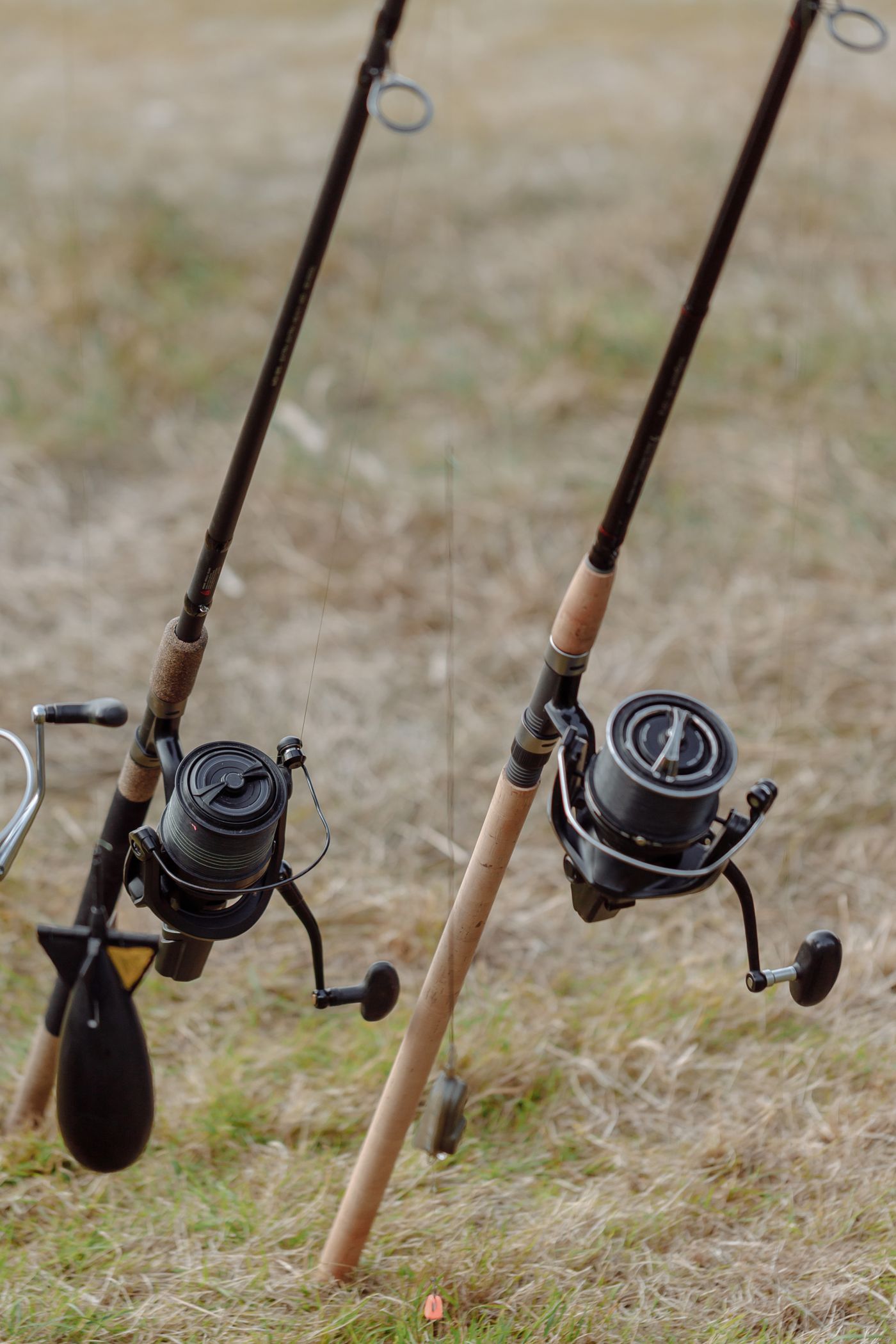
Start with your rod and presentation
The reel does three jobs: it stores enough line, lets you cast or feed it for your method, and controls a running fish. A high bearing count or dramatic drag number is less useful than a reel that fits the rod and casts the tackle you use. Decide first whether you will make repeated light-lure casts, work heavier lures around cover, fish bait in current, troll, or cast a fly.
A spinning reel belongs below a spinning rod. A baitcaster or conventional reel sits above a rod built for it. A fly reel fits a fly-rod seat and must carry the chosen fly line and backing. Mounting the reel, checking the seat, and comparing line capacities often eliminates more poor choices than a long feature list.
Spinning, baitcasting, conventional, and fly
Spinning reels release line from a fixed spool; the bail retrieves it. They are approachable for small lures, light line, and many bank-fishing situations. Look for a bail that closes cleanly, a line roller that turns freely, and a spool suited to the line you intend to use. A spinning reel can still suffer line twist, especially if a lure spins or line is loaded incorrectly.
A baitcaster turns its spool during a cast. Brakes, spool tension, and thumb pressure control that rotation. Anglers often choose one for repeated casts with moderate or heavier lures, accurate short casts, and direct line control. Very light lures can be cast with specialized bait-finesse equipment, so “baitcasters cannot cast light lures” is too broad. The usual beginner baitcaster, however, is less forgiving with light line and an underweight lure.
Conventional reels also use a revolving spool, but many are built for trolling, deep drops, or saltwater loads rather than repeated overhead lure casting. Check whether a model is intended for casting, level-wind trolling, or vertical work. Fly reels do little casting work; the fly line carries the cast. Compare arbor, capacity, drag, and balance with the fly rod instead of using spinning-reel size numbers.
Size is a capacity decision
Reel sizes are not standardized. One brand's “2500” may differ noticeably from another's. Read the printed capacity for the line material and diameter you will actually spool, then compare reel weight and spool dimensions. A small reel may be comfortable for pond trout but short of capacity for long surf casts or a fish that runs far. A large reel adds line and sometimes drag capability, but may make a light rod awkward and tiring.
Line capacity deserves special attention with braid. Because braid is thin for its breaking strength, a reel can hold far more yards than expected; backing or a braid-ready spool may help prevent slipping and unnecessary fill cost. Saltwater or big-river fishing also calls for enough usable line after a cast, current, and a fish's run. Do not select the smallest reel that technically accepts the line.
Gear ratio versus line pickup
Gear ratio counts spool or rotor turns per handle turn. Actual inches of line recovered also depend on spool diameter and how full the spool is. A high-ratio reel can take up slack quickly for certain jigging or topwater techniques; a lower-ratio reel may feel easier to turn under steady resistance, such as a hard-pulling moving bait. Neither is automatically faster on the water if the angler has to slow down to keep the lure working correctly.
Compare manufacturer “inches per turn” or “line retrieve per crank” when listed, not just a ratio like 6.2:1. For baitcasting, consider handle length and grip as well. For deep-water fishing, rapid empty-spool pickup and pulling power can matter in different phases of the same retrieve.
| Question | Specification to inspect | Why it matters |
|---|---|---|
| Will the reel hold my line? | Capacity by line diameter and material | Enough line remains after a long cast or run |
| How fast is pickup? | Inches per handle turn | More comparable than ratio alone |
| Will it balance my rod? | Reel weight and frame size | Comfort over repeated casts |
| Can it control a run? | Drag operation and usable range | Smooth pressure without sudden sticking |
Drag: smooth control beats an impressive maximum
Drag lets line leave the spool under controlled tension. A very high advertised maximum is not the same thing as a smooth, predictable drag at the pressure you will actually fish. Light line and small hooks make startup smoothness important. Strong fish or heavy cover raise the need for usable force, but knots, rod angle, and line strength set practical limits.
Try the drag through its working range when you can. It should increase progressively without jerks. On a spinning reel, the adjustment is commonly at the front of the spool; baitcasters often use a star drag; some larger conventional reels use a lever. Set it before fishing and recheck when line or conditions change. A locked-down drag is not a substitute for suitable tackle.
Water, corrosion, and construction
Freshwater use and occasional rain are different from repeated salt spray and sand. Saltwater reels may offer corrosion-resistant components and various sealing claims, but “sealed” is not a universal standard. Check the manufacturer's care instructions and do not assume any reel is maintenance-free. Salt, sand, and abrasive grit can affect a reel regardless of price.
Frame material, spool design, and bearings affect weight and feel, but a bearing count alone does not measure durability. A stable frame and good line management may matter more than one extra bearing. For a kayak or surf reel, think about splashes and how easy it is to keep grit out. For a beginner who fishes clean freshwater ponds, paying for extreme saltwater protection may add cost without solving a real problem.
Practical starting points
For small-lake trout, perch, and panfish with light lures, investigate a modest spinning reel whose capacity and weight fit a light or medium-light rod. For bass finesse rigs, keep the spinning system but check the line and drag you plan to use. For heavier bass presentations around vegetation, a baitcaster with suitable line capacity and a rod rated for the lure may be easier to control once you can set the brakes.
For inshore saltwater, begin with the actual lure or bait, likely fish, and exposure. A saltwater-suited spinning reel can cover repeated casting; a conventional reel may be more fitting for a boat bait or trolling setup. For fly fishing, match the fly line to the rod first, then ensure the reel carries the line and backing and balances in hand. In every case, compare the exact reel model: a product-family page may contain several sizes and gear ratios.
Before you order
Confirm reel type, retrieve side, size, line capacity, weight, gear ratio, line pickup, drag design, and whether the specified package is intended for your water. If the retailer presents a family with several sizes, select the exact variant before comparing prices. An observed starting price is not necessarily the price of the configuration that fits your rod.