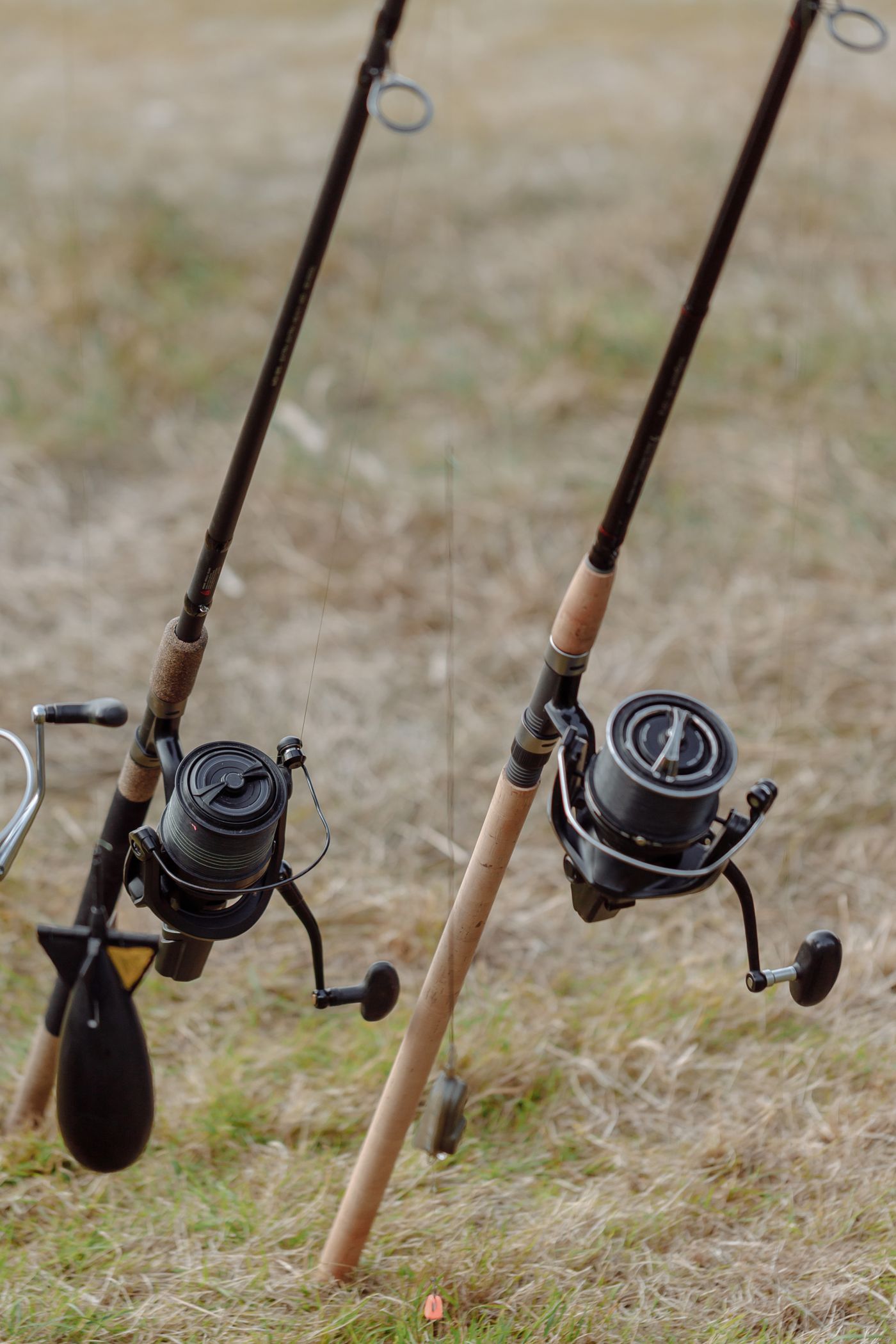
Choose the presentation first
The lure or bait determines much of the outfit. A tiny trout spinner needs a rod that loads with little weight and a reel that manages light line. A heavy sinker in current needs a rod rated to cast it and a reel with appropriate capacity. A bass jig in dense vegetation has different hook-setting and line needs from a treble-hook crankbait. Decide what you will cast, how far, and into what cover before choosing a reel by its appearance.
Target species is context, not a complete specification. One angler targets bass with small finesse baits; another fishes heavy cover with large single hooks. The right outfit for each can differ considerably. Begin with the rod's lure-weight range, power, and action, then find a reel and line that support that presentation.
Match the reel mechanism to the rod
Spinning reels hang beneath spinning rods. Casting reels sit above casting rods, which have a trigger-style grip and a different guide layout. Combining the wrong types can make casting awkward and line control poor even if the reel physically fits. Spincast outfits use their own compatible rod style. Fly rods are rated by fly-line weight, and the reel, line, and rod should be chosen as a matched fly system.
Within each style, check the physical reel foot and seat, especially with unusually small travel or specialty gear. Confirm the handle orientation and whether the reel's drag and pickup suit how you fish. A preassembled combo solves the broad mechanism match but still needs scrutiny of its ratings and size.
Use ratings as the common language
The rod's line and lure ranges are a starting envelope for casting and fish control. Lure rating is about how much weight loads the blank effectively; it does not say what size fish you may catch. Power describes the force needed to bend the rod, while action describes where it bends. These labels vary by maker, so actual printed ranges help you compare more than “medium” alone.
Compare line diameter and strength with both the rod rating and reel capacity. Reel spool capacity is usually stated for specific line diameters or pound tests, and braid's thinner diameter changes the amount it can hold. Leave enough capacity for your fishing, but do not choose an oversized reel solely for extra line you will never use. The line's weakest knot and leader matter when setting drag.
| Outfit idea | Rod question | Reel and line question |
|---|---|---|
| Small pond lures | Will the lure load the rod? | Can the spool manage light line? |
| Bass jig in cover | Can power/action drive the hook? | Is drag and line suitable for cover? |
| Bank fishing in current | Can it cast the full rig weight? | Is capacity sufficient for distance and current? |
| Fly fishing | Does line-weight rating fit the fly? | Does reel balance and hold line/backing? |
Reel size, drag, and balance
Reel-size numbers such as 1000, 2500, or 3000 are convenient within a brand but not universal dimensions. Compare spool diameter, weight, line capacity, and drag specifications on the exact model. A very small reel on a long, powerful rod may feel awkward and hold too little line. A large, heavy reel on a short light rod can tire your wrist. Mount the reel and hold the outfit where you naturally grip it to see how it feels.
Balance is not a single ideal point. Some anglers prefer a slightly tip-light setup for repeated casts; others value more rod length and accept a different feel. The practical test is whether you can cast and retrieve the intended presentation comfortably. Drag should start smoothly and protect the line under realistic load. More advertised maximum drag is not automatically better when the rod and line are light.
Common mismatches and fixes
If a light lure drops near your feet, check whether it sits below the rod's lure range, whether line diameter is excessive, or whether the spool is underfilled. If a heavy bait makes the rod feel overloaded, move to a rod whose published range includes the complete rig, not just the lure body. If line springs off a small spinning spool, diameter and line memory may be more relevant than reel price.
If a fish repeatedly pulls free on small trebles, a very stiff rod, low-stretch line, or locked-down drag may be working against you. If a heavy single hook will not set at distance, the outfit may have too much give for that presentation. Change one component deliberately, and avoid assuming every problem calls for a new reel.
Spinning, casting, and fly examples
Imagine a pond angler using a light spinner for trout and perch. The lure must load the rod at its actual weight; a light or medium-light spinning rod and a manageable small reel are sensible families to investigate. Now consider a bass angler pitching a heavy jig into vegetation. A casting rod with enough power for the jig and hook, a compatible baitcaster, and line that can pull through cover make more sense than copying the pond outfit. These are starting points, not fixed species prescriptions.
Fly fishing changes the matching language. A fly rod is rated for a fly-line weight, and the reel primarily holds that line and backing while balancing the rod and providing appropriate drag for the target fish. A large arbor may retrieve line quickly, but an oversized reel can make a small-stream rod awkward. Surf and offshore outfits add casting-weight, capacity, current, and corrosion demands that require checking every component's exact rating.
Test the assembled outfit
If you can handle the gear before buying, mount the reel and hold the outfit where you will actually grip it. Check that the reel foot seats securely, the bail or spool clears the handle and guides, and the rod does not feel unmanageably tip-heavy for repeated casts. Draw a little line through the guides and check for damaged inserts; a rough guide can erase the advantage of a carefully selected line.
If buying online, compare exact model codes rather than a family photo. A product listing can show one reel size while defaulting to another, or a one-piece rod while the selected variant is two-piece. Retain the maker's ratings and check the delivered configuration before spooling. Once assembled, make a few practice casts with a safe weight within the rod's range and adjust the line fill or drag before the first trip.
A final compatibility check
Before ordering, confirm rod style, length, pieces, power, action, lure and line ranges, reel type, reel size and capacity, and the line you plan to spool. Look at the exact variant: a rod family may include ultralight and heavy models, and a reel family may include several very different capacities. Check how the outfit travels and whether a saltwater environment requires corrosion-conscious components and upkeep.
If you are uncertain, start from one specific trip: “I will cast quarter-ounce lures from a pond bank,” or “I will fish bait with a two-ounce sinker from a pier.” That sentence narrows the outfit far better than “I want a good all-around rod.”