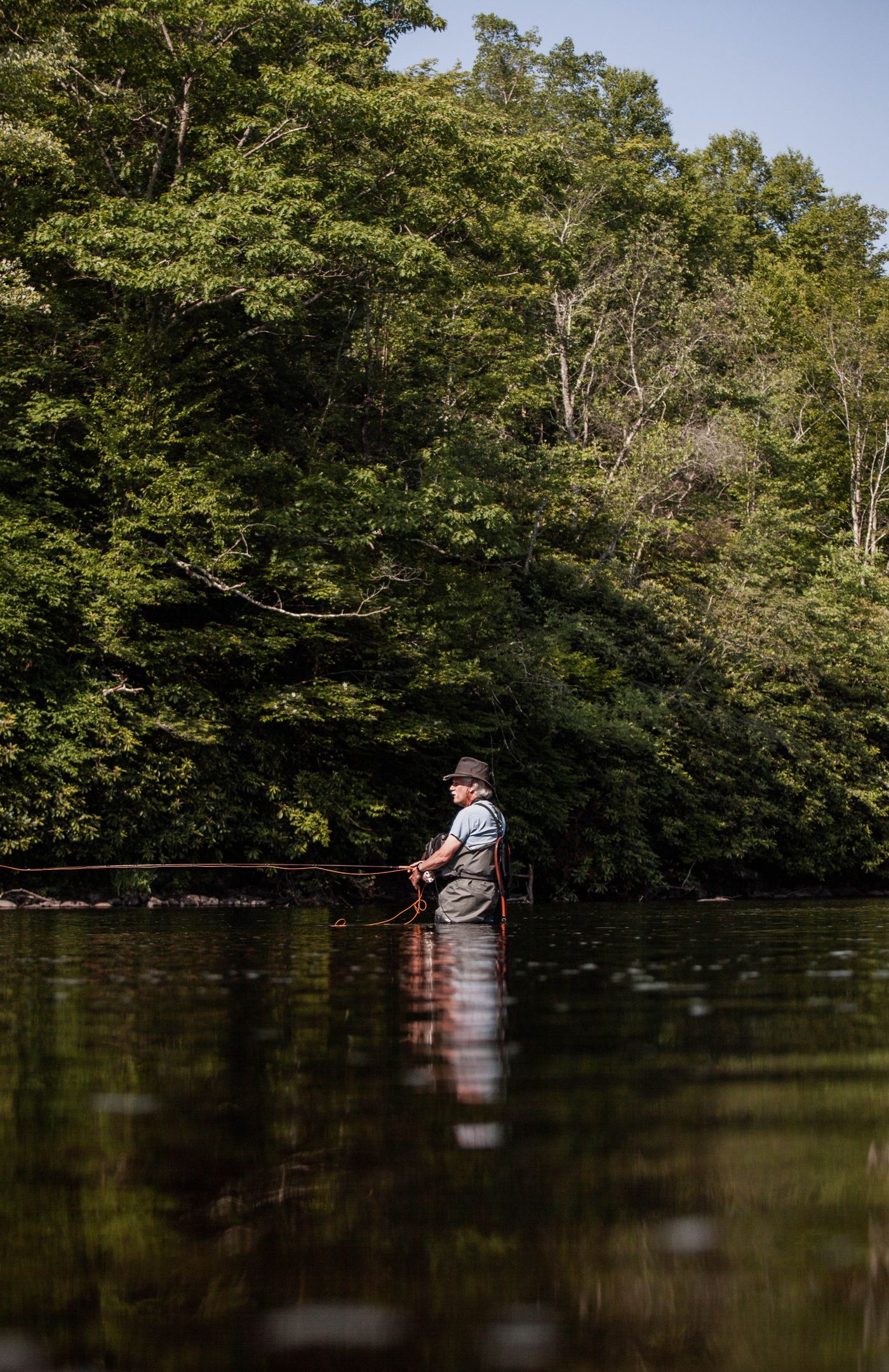
The water determines the outfit
Trout occur in small streams, larger rivers, stocked ponds, and deep lakes. “Trout rod” therefore describes several useful tools rather than one universal specification. Start with how far you must cast, whether branches limit your backcast, the size of the fish likely present, and whether you will use flies, natural bait, or lures. Local regulations may allow one method and prohibit another on the same water.
A short, light spinning outfit is easy to handle among streamside brush and with modest lures. A longer light rod can help line control or distance on a lake bank. Large river trout, salmon-sized migratory fish, or heavy current may justify more power. Choose a rod whose stated lure and line ranges include the tackle you will actually use, then match a reel and drag to that range.
Spinning tackle for streams and small lakes
A light or ultralight spinning rod can cast small spinners, spoons, and other compact presentations when its lure rating fits their weight. An ultralight label is useful only if the exact rod can cast your lure without overloading. A manageable reel, filled correctly, helps light line leave the spool cleanly. Mono offers simple knots and some shock absorption; thin braid with a suitable leader can improve contact but adds a connection knot and demands more care with drag.
Small streams often reward accurate short casts and control around rocks and branches more than distance. Larger rivers may call for extra length to steer line around seams. On a stillwater bank, a longer light rod can make it easier to reach the edge of a drop-off or carry a float rig. Use the rod as a line-control tool as well as a casting tool.
Fly gear is a separate matched system
Fly fishing relies on the weight of the fly line to cast a very light fly. Match the rod's line-weight designation to a compatible line and reel; a spinning reel or monofilament main line is not a substitute. A shorter fly rod may be comfortable in a brushy creek, while more length can help mend line on a river or manage a long stillwater cast. The appropriate weight depends on fly size, wind, fish, and water, not simply the word “trout.”
Budget for backing, fly line, leader, tippet, and a small selection of patterns that match what trout eat locally. Dry flies, nymphs, and streamers ask for different control and sometimes different leader choices. A new fly angler can learn faster by choosing one common presentation for one water than by carrying dozens of patterns without a plan.
Bait, lures, and depth
In a stream, an appropriately sized spinner or spoon can cover moving water, while a bait or nymph rig may drift through a run at a controlled depth. In a pond, a float can suspend bait above weeds or bottom; a small moving lure can help locate active fish. A deep lake may demand a way to reach fish beyond the shallow bank zone. Fish location changes with season and temperature, so the same terminal rig will not work equally well all year.
Match hook size to the bait and expected fish, and choose enough weight to control the presentation without making it unnatural. Use only legal bait, hook style, and number of hooks. Some trout waters are artificial-lure-only, fly-only, or catch-and-release; check the exact water and date before packing. Barbless hooks may be required or advisable for easier release.
Line, leader, and gentle handling
Trout in clear water can be wary of a heavy visible terminal line, but fine line is vulnerable to abrasion and breakage. Balance visibility against rock, current, fish size, and the rod's rating. Inspect the leader after contact with stone or timber. Set the drag to protect the weakest connection; a line rating is not a license to pull with that force all the time.
If releasing fish, a knotless rubberized net, wet hands, and quick handling can help reduce damage. Keep the fish in water as much as practical, especially in warm conditions, and follow local guidance on when catch-and-release fishing should be avoided. A small pair of forceps or pliers makes removing a deep or awkward hook less chaotic. Waders can improve access in suitable water, but current, slippery stones, and cold water make judgment and safety equipment essential.
Adjust the kit to season and access
A trout lying deep in a summer lake asks for a different presentation from one feeding in a cool, shallow stream. Carrying more lure colors will not solve a depth problem. Learn where fish can hold in the season you are fishing and choose a method that reaches that zone without violating local rules. A float can keep bait above weeds, a sinking presentation can reach a deeper shelf, and a fly-line choice can change where a fly fishes. Each change affects rod and line requirements.
Access is equally important. A steep bank may need a longer net and careful landing plan; a brushy creek may reward a shorter rod and a minimal pack. If the only productive water requires dangerous wading, choose another legal access point instead of treating waders as permission to cross. Local temperature, flow, and catch-and-release advisories can change what a responsible trip looks like.
How to narrow a purchase
Write down the actual water, likely trout size, legal method, and most common lure or fly before comparing brands. For a spinning outfit, check rod lure range, length, pieces, reel line capacity, and a line or leader you can manage. For a fly outfit, start with rod and fly-line weight, then choose the reel and leader system. An attractive reel with the wrong capacity or a rod too powerful to cast your lure is a poor match even if both carry a trout label.
Expect to revise a small kit after fishing it. If casts are short because a tiny lure will not load the rod, inspect the rod rating and line diameter before buying a bigger reel. If repeated breakoffs occur on rock, inspect and adjust the terminal material or route of the drift. Let the water tell you which component limits the setup.
Three useful starting plans
For a brushy creek with modest trout and legal artificial lures, investigate a compact light spinning rod, a small reel, manageable line, and a few lures within the rod's rating. If you want to learn fly casting there, choose a correctly matched fly outfit and seek instruction on casting and safe wading. The limited space matters as much as the fish size.
For a stocked pond, a light spinning outfit may handle a small float-and-bait rig or modest moving lures. Check which method is legal and how far the bank requires you to cast. For a larger river with current and possible larger fish, consider whether extra rod length, line control, and a stronger drag system are needed. Do not automatically carry a delicate creek outfit into that setting.