Begin with the job, not the brand
Write down three things before comparing rods: where you will fish, what you will cast or present, and the fish you may encounter. A small spoon for trout in a creek, a jig worked along a lake bottom, and a bait rig cast beyond the surf ask for different tools. The species alone is not enough. A bass rod for a light drop-shot rig is a different choice from one meant to pull a heavy frog through vegetation.
If you are unsure about technique, choose a versatile method first. For many freshwater beginners, a spinning setup is easier to learn and covers a useful range of small and medium lures. Then narrow length, power, and action around your actual water. The printed lure and line ranges on the specific rod matter more than a broad label such as “bass rod.”
Choose the rod and reel system
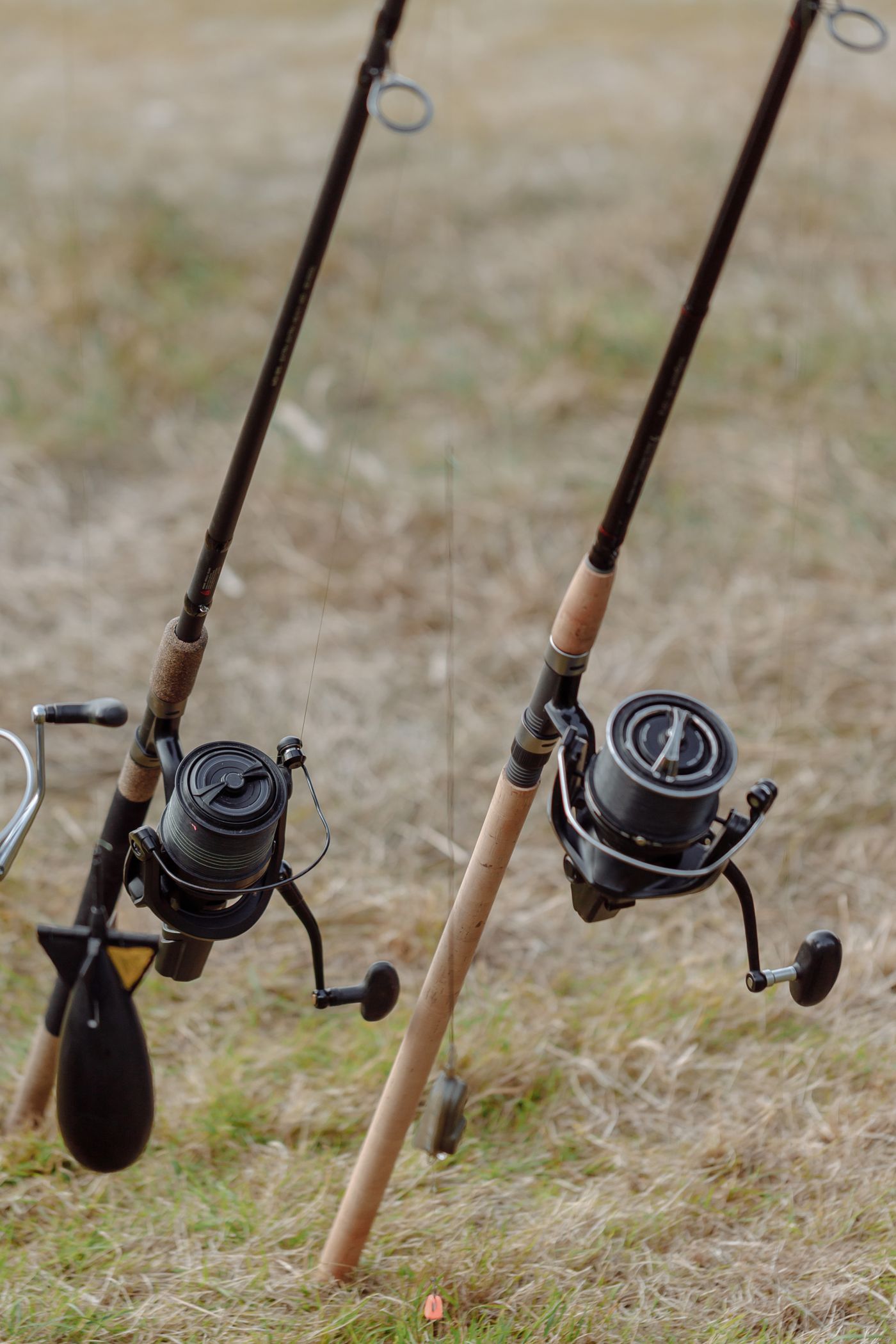
A spinning rod carries its reel below the blank and has guide spacing designed for line leaving a fixed spool. It suits light lures, live bait, and many all-purpose freshwater setups. A casting rod puts the reel and guides above the blank. Paired with a baitcaster, it offers close control over heavier presentations, but the reel needs braking and thumb practice. The two rod styles are not interchangeable simply because a reel foot fits the seat.
A fly rod casts the weight of its fly line, not the nearly weightless fly. Its “weight” number refers to a line system; match rod and fly line weight before choosing a reel that balances the outfit and holds enough backing. A shorter, lighter fly rod can be pleasant on brushy trout water, while larger flies, wind, and bigger fish call for different line weights and often longer rods.
Conventional rods pair with revolving-spool reels for trolling, deep-water bait, and some offshore jigging. The guides, handle, and blank are built for their intended load. Surf rods are long casting tools for presenting bait or lures beyond the wash; they can be spinning or conventional. Trolling rods usually spend time in a holder and may use a slower, deeper bend to absorb a fish's pull. Do not assume that a surf, trolling, and boat jigging rod with the same power label will behave alike.
Let the water change the shortlist
Small streams reward a rod that can cast accurately under branches and be moved around brush. A short light spinning rod or a short, light fly outfit may make sense; maximum casting distance is rarely the goal. Rivers add current and line control. A little more length can help keep line off conflicting seams, but a long rod can be awkward on a narrow, wooded bank.
At ponds and small lakes, a versatile spinning rod may cover panfish, trout, and light bass presentations. On broad reservoirs or open shorelines, extra length can help reach water and manage line, particularly with floats or moving lures. From a boat or kayak, the available casting room and your chosen technique may matter more than raw distance; a very long rear grip can be troublesome in a compact cockpit.
Inshore saltwater asks you to think about lure or bait weight, current, corrosion exposure, and the possibility of stronger fish around structure. Offshore fishing may shift the choice toward stout boat, jigging, or trolling rods with larger line ratings. Surf fishing adds heavy rigs, breaking waves, and a need to cast from shore. A general freshwater rod that casts small lures well is not automatically suitable for a multi-ounce surf sinker.
| Setting | Useful starting direction | Main constraint |
|---|---|---|
| Brushy creek | Short light spinning or light fly rod | Casting room |
| Open lake shore | Medium-length spinning rod matched to lure weight | Reach and line control |
| Boat with heavy cover | Casting rod with power suited to the hook and cover | Control at short range |
| Surf | Surf-rated spinning or conventional rod | Rig weight and casting distance |
Species helps set the load; technique finishes the choice
Perch, bluegill, and many other panfish usually lead you toward lighter rods and small offerings. Trout can mean tiny stream lures, a fly presentation, or heavier spoons in a lake. Walleye anglers may want a responsive tip for a jig, while someone trolling a crankbait for the same fish needs a different bend and length. Bass cover light finesse rigs through heavy vegetation work; one “bass” specification cannot serve that range equally well.
Pike and catfish often involve stronger tackle, larger hooks, or heavier baits, but the appropriate rod still depends on presentation and fish size. Salmon and steelhead can require length for current control, float fishing, or long casts; a compact boat trolling rod solves a different problem. For inshore species such as redfish or striped bass, compare lure weight and structure before selecting power. Larger offshore species put line capacity, sustained load, and the method of fighting the fish ahead of a simple species label. Use the examples as a way to narrow options, not as universal prescriptions.
Length: reach, distance, and room to work
Longer rods can load over a longer stroke and often help cast farther, but distance also depends on lure weight, line, technique, and casting skill. Extra length can pick up line quickly for a hookset, steer line around obstacles, and manage a float across current. It can also make accurate casts under overhanging branches harder. Shorter rods are easier to maneuver in tight places and can give a direct feel when working close to the boat.
Around six to seven feet is a common place to begin comparing general freshwater spinning rods, not a rule. Shorter creek rods and much longer salmon, surf, or float rods exist for clear reasons. Ask where the rod will be used most often and whether its handle length interferes with your cast or stance. A surf angler on an open beach and a kayak angler seated beside a low gunwale solve almost opposite space problems.
Power: how much load bends the rod
Power describes resistance to bending. Ultralight and light rods load with small lures and thin line and suit many panfish or small-stream trout presentations. Medium-light can cover slightly larger lures and finesse bass or walleye work. Medium is a broad middle ground for many freshwater lures and baits. Medium-heavy and heavy rods accommodate larger hooks, stronger line, or fish that must be guided away from cover. Extra-heavy belongs to specialized high-load work, such as very large lures or powerful fish; it is usually a poor match for a tiny spinner.
These labels are not standardized across brands or even across every series from one maker. A medium rod in a light inshore range may not feel like a medium bass rod. Compare the line and lure ratings and, when possible, the manufacturer's intended techniques. Too much power for a light lure makes casting and bite detection awkward. Too little power for a heavy rig can overload the blank and make hook control difficult.
| Power range | Often worth investigating for | Check carefully |
|---|---|---|
| Ultralight / light | Small spinners, tiny jigs, panfish, stream trout | Lure and line limits |
| Medium-light | Finesse rigs, light jigs, walleye presentations | Hook type and cover |
| Medium | Many general-purpose lures and bait rigs | Actual lure range |
| Medium-heavy / heavy | Larger single hooks, heavier baits, thick cover | Weight and intended technique |
| Extra-heavy | Specialized large-lure or high-load work | Method-specific rating |
Action: where the rod bends
Action describes the shape of the bend under load. A fast-action rod bends most near the tip and moves into a firmer midsection. It can help communicate a light jig's contact with bottom and drive a single hook when paired with suitable line. Moderate-fast spreads the bend farther down; it can offer a compromise between responsiveness and forgiveness. Moderate action bends more through the middle and often helps keep steady pressure on treble-hook lures or protect a light leader when a fish surges. Slow action bends deeply and appears in specialized applications; it is not simply “worse” or “less sensitive.”
Power and action are separate. A heavy moderate rod and a light fast rod can both be sensible for their own tasks. Rod material, taper, lure weight, and how hard you load the blank change how a rating feels in use. Treat “fast” as a starting description, then check the exact model. Treble hooks often benefit from some give; a heavy single hook in cover may demand more immediate control. The right answer also changes when you switch from stretchy mono to low-stretch braid.
Read the line and lure ratings
The line range printed on a rod helps you pair it with line strength, while the lure range tells you approximately what weight will load the blank for a cast. A rig's total casting weight includes sinker, bait, and hardware, not just the hook or artificial lure. Fishing far above the marked lure range can damage a rod; fishing far below it may make casting poor.
Ratings are guides, not guarantees of landing a fish of a particular size. Drag setting, knots, rod angle, current, and cover all affect load. For a fly rod, the line-weight marking is especially central because the weighted fly line provides the casting mass. In every system, use the exact model's printed range rather than a family-wide price or headline.
Blank material and portability
Carbon-based blanks, often called graphite, are commonly chosen for low weight and crisp feedback. Fiberglass tends to flex more deeply and can be useful where a forgiving bend matters, including some moving baits and trolling applications. Composite rods blend materials to tune those traits. None of these words alone tells you durability or quality: fiber layup, resin, taper, guides, and workmanship matter too. A high-modulus label by itself should not decide the purchase.
One-piece rods avoid a ferrule and are simple to rig, but they are inconvenient in small cars and on flights. Two-piece rods are easier to carry and are common across good-quality ranges. Multi-piece travel rods can fit luggage or a pack; check packed length, ferrule alignment, and whether the exact model retains the action you want. A rod you can safely transport and use often is more useful than a theoretically ideal blank that never leaves home.
Match the reel before buying
A spinning reel belongs on a spinning rod and a baitcaster on a casting rod. Check the reel seat, guide orientation, and the reel's stated line capacity. Reel size numbers are not uniform across brands; compare actual capacity and weight rather than treating “3000” as a universal standard. A large reel can make a light rod tiring, while a tiny reel may hold too little line for a long cast or strong current.
For fly gear, start with a rod and fly line of compatible weight, then choose a reel that holds the line plus enough backing for the intended fish and balances the rod. For saltwater, confirm that the reel and hardware suit the exposure and that the line and lure or rig ratings fit together. If buying a combo, still read both components' specifications; “pre-matched” does not tell you whether the exact package suits your water.
Five starting scenarios
“I want trout and perch from the bank at small lakes.” Start by comparing light or medium-light spinning rods that cast the small lures or float rigs you actually plan to use. A manageable length helps both shoreline reach and control. Check the rod's lure range before choosing line and a reel; an ultralight rod is not required if your bait rigs are heavier.
“I fish for bass from a boat.” Decide whether the first technique is a light finesse rig, a moving bait with treble hooks, or a heavy single-hook presentation near cover. The first may suggest a medium-light spinning rod, the second a more forgiving moderate-action option, and the third a more powerful casting rod. Boat fishing does not by itself dictate one rod.
“I want to fly fish small mountain streams.” Investigate a short, light fly rod and matching line that can load with short casts. Brush and wind will influence the choice more than maximum distance. Choose a reel with appropriate line and backing capacity, then consider whether a multi-piece rod will make the approach to the stream easier.
“I want to fish for salmon.” Specify whether you will cast from a riverbank, fish a float, drift a bait, or troll from a boat. River methods may benefit from extra length for line management; trolling calls for a rod designed to remain loaded in a holder. Look at the expected current, fish size, and line rating before choosing power.
“I fish from a saltwater beach.” Start with the weight of the complete bait rig or lure and the distance required to clear the shore break. Compare surf-rated rods with the right lure range and a saltwater-appropriate reel. A longer rod can help reach, but choose a length you can cast safely and repeatedly.
A final check at the product page
Confirm the exact model's type, length, power, action, piece count, line rating, lure rating, handle, and intended water. Retailer pages often group several configurations under one product-family heading, and an observed starting price may belong to a different variant. If any of those fields are missing, check the manufacturer's model chart or ask the retailer before ordering. A careful short list of two or three suitable rods beats choosing from a category label alone.