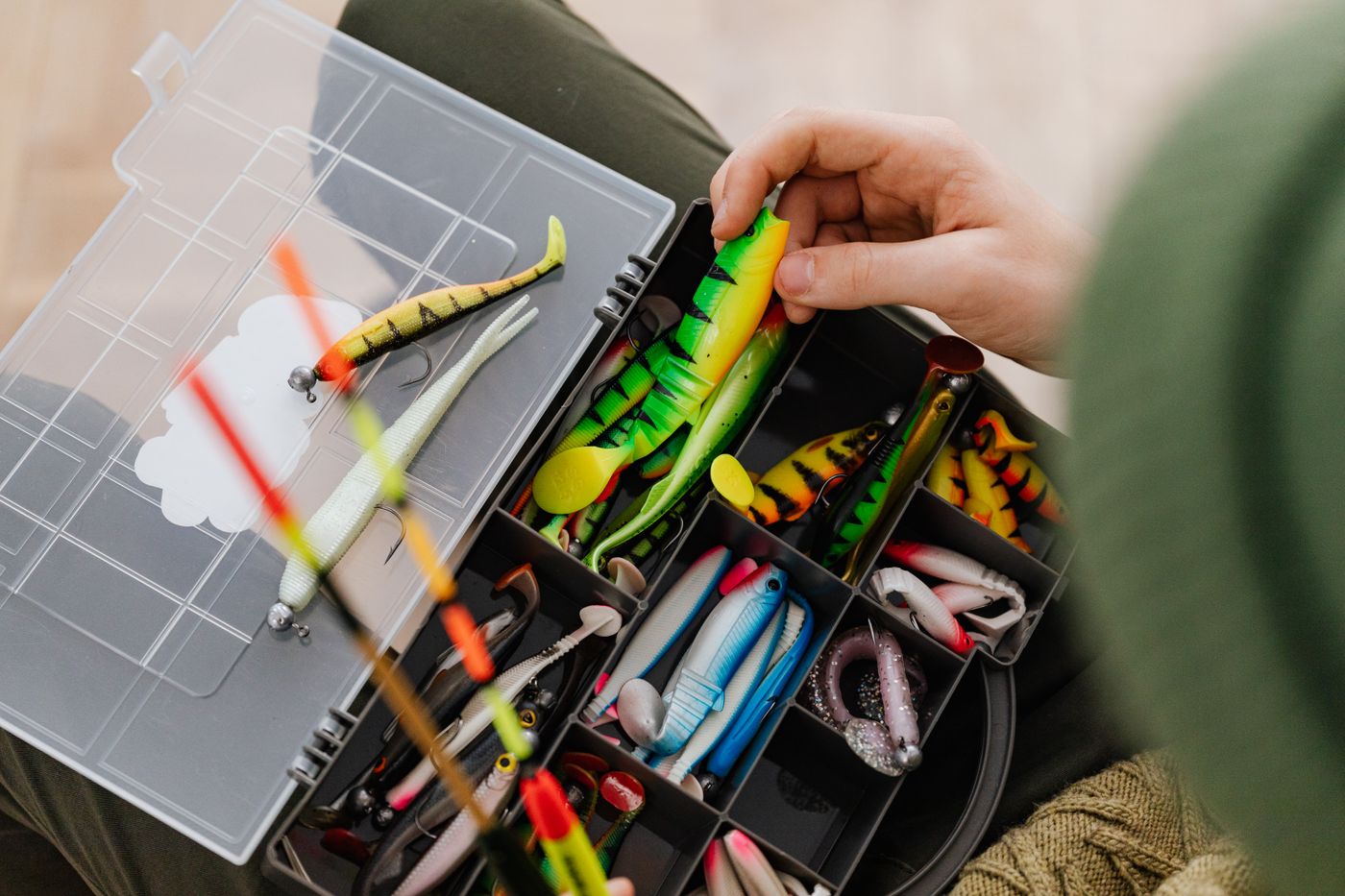
Organize for a fishing decision, not a display shelf
A useful box answers “What do I need for this cast?” without forcing you to open six trays. Start by grouping tackle by a water, species, or presentation you actually fish. A trout-stream tray might hold a few small spinners and terminal pieces; a bass jig tray has different hooks, weights, and trailers. Sorting everything only by brand or color can look tidy at home while slowing you down at the bank.
Separate items that tangle, puncture, or corrode one another. Hooks need secure compartments; soft plastics may need their original bags if colors bleed or materials react; heavy sinkers can damage delicate lures in a loose tray. Keep labels short and readable. The goal is to carry fewer things with a known purpose, not to transfer your whole garage into a bag.
Choose the container around transport
A hard tackle box gives fixed compartments and quick access from a boat deck or a parked vehicle. A soft bag with removable utility trays is easier to adapt, and a backpack or sling leaves hands free when walking a bank. A small waterproof case can protect essentials in a kayak or rain, but “waterproof” applies only when its seals are clean and closed correctly. Size and access matter more than the number of pockets in a product photo.
Measure where the bag will sit and how far you will carry it. Check the exact utility-tray series included or accepted. Common 3500, 3600, and 3700 labels identify different tray families; do not assume a bag marked for one takes another. Adjustable dividers make sense for changing tackle, while fixed small cells can keep hooks and swivels from migrating.
| Storage style | Useful when | Tradeoff |
|---|---|---|
| Hard box | Gear stays in one boat or vehicle | Bulky to carry |
| Soft bag and trays | You swap kits by trip | Check tray fit and moisture |
| Backpack or sling | You walk and fish | Access can be slower |
| Small sealed case | Spray, kayak, or a compact kit | Capacity and seal care |
Give terminal tackle its own logic
Hooks, swivels, snaps, beads, floats, and weights are small enough to disappear into a mixed box. Group them by type and practical size range, then label those groups. Keep a few common replacement pieces in the day bag and the larger reserve at home. It is easier to notice that a hook size has run out when each size has a clear place.
Store loose treble-hook lures so points cannot catch every neighboring lure. Hook covers or individual slots can reduce tangles. Keep leader spools or pre-tied rigs protected from sharp hardware and direct heat. Used line should go into a secure waste container for disposal, never onto the bank or water.
Make a trip kit and a home reserve
The home reserve holds bulk line, extra lure colors, spare hooks, and off-season gear. The trip kit holds what suits today's water and weather. Packing from a reserve makes it possible to bring a small, organized selection without giving up options for the season. A short packing list for each common outing helps: rod and reel, line, two or three presentations, pliers, net when needed, license, and safety items.
If you fish several methods, build removable trays by technique. A compact “float and bait” tray and a “moving lures” tray can share a bag. If you fish from a kayak, secure small trays before opening them; a good compartment is only useful while it stays in the boat.
Protect soft plastics and hard baits differently
Soft plastics are easier to identify in their labeled bags, which also preserve size and color information. Some formulas and colors can bleed or react when mixed; keeping unfamiliar materials separate avoids learning this after a summer in a hot vehicle. A binder or sleeve can work for bags, but check that its pockets accommodate the packages you actually buy. Keep hooks and jig heads in a firm compartment so points cannot puncture the bags.
Hard baits need space for their hooks and finishes. Crankbaits piled together can tangle before the first cast. Separate larger treble-hook lures or use hook guards where practical; do not overpack a compartment so the lid presses on bills or hooks. Spinnerbaits and long leaders may need dedicated slots or sleeves. The right organizer is the one that lets each bait be removed without dismantling the rest of the tray.
Pack for access in the place you fish
On a boat, a box can sit flat and open without losing its contents. On a rocky bank, a shoulder bag may tip as you move; choose trays that latch firmly and can be opened one at a time. A backpack spreads weight on a long walk but is slower to access than a small waist or sling pack. If you wade, keep critical tools secured to the body and leave bulky boxes on shore or in a vehicle. A waterproof label on a case means little if it is opened with wet hands above the water.
Put the items used every few casts—line cutter, pliers, one spare rig—where you can reach them without setting a whole bag in mud. Keep sharp items away from clothing pockets. Decide how you will carry used hooks and discarded line home before the first snag or retie. A small waste container is part of the tackle system.
Buy storage from a packing list
Lay out the tackle for one ordinary trip before shopping for a box. Count the lures with exposed trebles, the small terminal pieces, the soft-plastic bags, and the tools that need their own sleeves. Then choose a container that fits those objects without forcing every compartment full. Check the external dimensions and latch in the seller's exact variant; product families often differ in tray count or included boxes.
An oversized bag can encourage taking everything and make long walks tiring. An undersized one creates tangles and damaged tackle. Adjustable trays offer room to revise the system as techniques change, but fixed cells can be better for tiny hooks that migrate through gaps. There is no need to match every box from one brand. Fit, closure, and quick access are the useful tests.
Dry, inspect, and reset
Wet lures sealed overnight with dry hooks can start corrosion through the whole tray. After fishing, empty anything wet, rinse saltwater-exposed gear as its maker recommends, and dry compartments before closing them. Inspect hooks for rust or bent points and line for abrasion. Dispose of damaged tackle safely; do not put a compromised hook back into a box because it still looks mostly usable.
Restock the few pieces you actually used and return stray tackle to its assigned place. This five-minute reset is what keeps a system functional. If a compartment stays untouched for a season, consider removing its contents from the trip kit. Organized tackle is a smaller, more reliable working set, not a perfectly filled bag.