Choose a first fishing trip before a first shopping list
A stocked neighborhood pond, a trout stream, and a saltwater pier call for different gear. Find out what fish are present, whether you can reach them safely from shore, and what local rules allow. Then buy for one likely outing. You can learn more from a modest, coherent kit used often than from a large box of unrelated lures.
For many freshwater beginners fishing small lakes or ponds, a spinning rod and reel is straightforward to cast and versatile enough for bait, a float, or modest lures. A fly outfit is a different system, and a heavy saltwater or catfish outfit solves different problems. Ask a local tackle shop or fisheries agency what people use on the water you plan to visit. Their advice is most useful when you can name the water and likely species.
The actual core kit
You need a suitable rod, matching reel, line, and a legal way to present a hook. For simple bait fishing, that may mean a few hooks, split shot or another appropriate weight, floats if you want to suspend bait, and bait permitted at the site. For lure fishing, a small selection of weights and shapes relevant to the local fish is enough to start. Carry spare line or pre-tied leaders only if the rig calls for them.
Add a way to cut line, pliers or forceps for hook removal, and a small container that protects hooks. A landing net is especially useful when the bank is steep or fish must be handled gently; check whether a specific net material is recommended or required for the fishery. Keep a means of measuring fish if size limits apply. A phone, weather-aware clothing, and drinking water matter more than another lure pack.
| Need | Simple starting choice | Check before buying |
|---|---|---|
| Rod and reel | Matched spinning outfit for common freshwater use | Species, lure weight, and rod/reel ratings |
| Line | Manageable mono or another line suited to the outfit | Reel capacity and rod line range |
| Presentation | A few legal hooks, weights, floats, or local lures | Bait and hook restrictions |
| Tools | Line cutter and hook-removal pliers | Grip and size for the hooks you use |
Pick a rod and reel that work together
A medium-light or medium spinning rod in a manageable length can be a useful freshwater starting point, but these labels are not universal specifications. Panfish and small trout may call for lighter tackle; big catfish, surf, and heavy cover call for something else. Match the reel's foot to a spinning rod, compare its line capacity with the line you intend to use, and keep your common bait or lure weights within the rod's stated range.
A preassembled combo can remove one compatibility decision. It still deserves a close look: check the rod's length, power, number of pieces, and the reel's size. Some inexpensive kits are suitable learning tools; others bundle tackle that does not fit your local water. Spend on a reliable core outfit before collecting specialized accessories.
Keep the first tackle box small
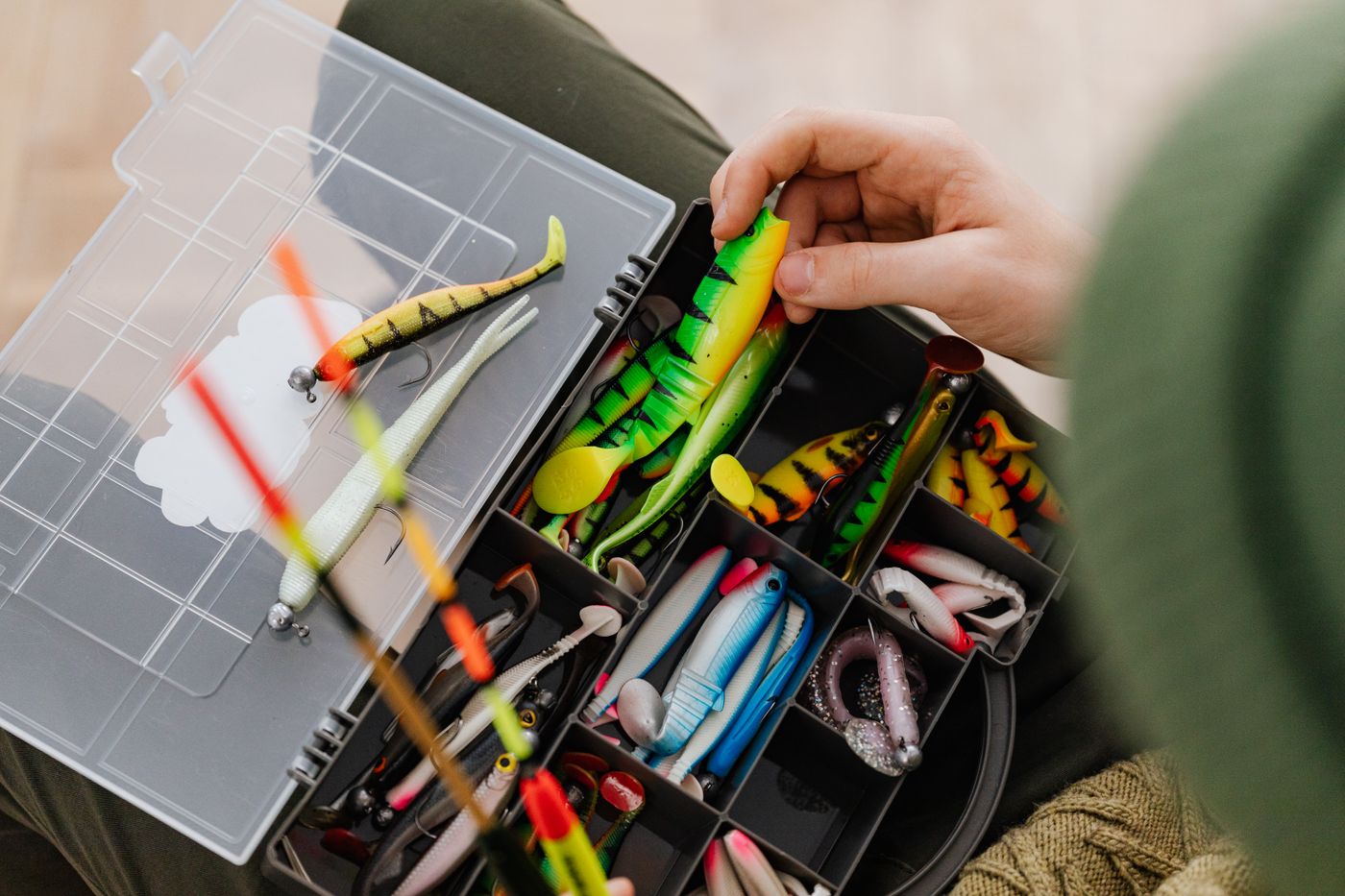
Begin with two or three presentations that cover a real range of conditions. A float-and-bait rig teaches depth control and bite detection. A small spinner or spoon lets you search water with a moving lure, where legal. A simple bottom rig may fit a deeper pond or a catfish outing. You do not need all three on every trip, and you should not buy a generic assortment without checking hook size, bait rules, and the fish you will target.
Store hooks so their points cannot snag clothing or line. Separate wet lures after a trip; rust spreads in a closed compartment. Label one small tray by purpose rather than carrying several half-filled boxes. Replenish the few things you actually lose, such as hooks or split shot, before adding whole new lure families.
Safety and local rules belong on the list
Check current license, season, location, harvest, bait, and hook rules with the local fish-and-wildlife agency. Rules can differ across nearby waters and change over time. A legal freshwater license does not necessarily cover every special area or saltwater trip. If you plan to keep fish, bring the required measuring and storage equipment and know the rules before casting.
If you fish from a boat, kayak, dock, or exposed bank, choose an appropriate, properly fitted life jacket and follow local boating requirements. Footing, weather, water temperature, and current matter even when the gear is simple. Tell someone where you are going, and make the first outing an accessible place where you can focus on casting and handling tackle safely.
Make a realistic first budget
Put most of the budget toward a rod and reel that cast the legal presentation you will use, line that behaves on that reel, and a few pieces of terminal tackle. Leave room for a license, a suitable life jacket if boating, and basic tools. A low sticker price on a kit can disappear when the included line coils badly or the hooks do not match local fish. Compare the actual contents of a combo rather than the count of accessories shown on its package.
Borrowing or renting gear for a first outing can be useful if available locally. It lets you discover whether you enjoy bank fishing, fly casting, or a boat trip before buying specialty equipment. When buying used, inspect guides for chips, the rod blank for cracks, the reel's bail and drag for smooth operation, and the seat for a secure fit. A sound modest outfit is a better start than a worn premium one with hidden damage.
Practice a few small skills before the trip
Spool the reel to the maker's fill guidance and learn one dependable knot for the hook or lure. Practice a short cast in an open area with a safe practice weight; a little control matters more than distance. Know how to open and close the bail, set the drag, and check the last few feet of line for damage. These skills prevent many problems that otherwise look like equipment defects.
At the water, start with one rig, make a few casts at a manageable distance, and watch how it behaves. If the bait hangs below the intended depth, adjust a float or weight. If a lure spins line badly, change the presentation or use an appropriate swivel where it will not spoil the lure's action. Write down what worked and what failed. That short record will make the next tackle purchase much more specific.
What can wait
A fish finder, premium reel, large tackle bag, specialized rod rack, and dozens of lure colors are optional for an introductory shore trip. Waders are useful only when wading is appropriate and you understand the water; they are not a substitute for safe judgment. A net and pliers may be more useful than many decorative accessories.
After two or three trips, write down what you used, lost, and wished you had. If you repeatedly cannot cast a light lure, consider whether the rod's lure range or line diameter is the problem. If you fish only a small brushy stream, a shorter rod may be easier than the long all-around outfit you first considered. Let those observations drive the next purchase.